Scientific Breakthrough: Researchers Explore Whether Giant Eagles Hunted Early Human Ancestors
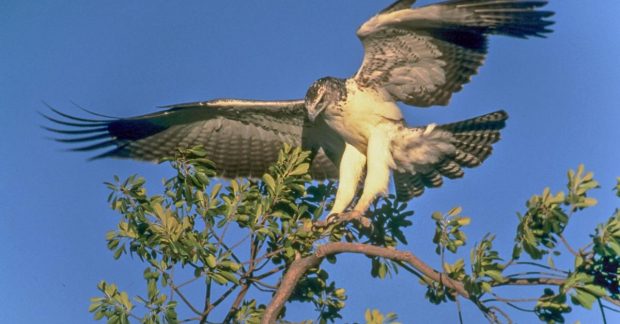
New evidence from the Sahara Desert shows that birds of prey can hunt much larger animals than previously thought, reigniting debates about ancient evolutionary hazards.
 🎓Education
Photo: UNIAN
Key points
- Researchers found evidence that eagles can successfully hunt much heavier prey than previously believed.
- Baboon remains in Chad weighing over 22 kg displayed deep claw marks from raptor attacks.
- The discovery supports hypotheses regarding potential aerial threats to early human ancestors.
Until recently, the scientific consensus held that humans and similar-sized primates were simply too large to be targeted by birds of prey. However, a recent analysis of fossil findings in the Sahara Desert within Chad challenges this long-held assumption. Researchers discovered the remains of adult baboons whose body mass significantly exceeded the previously accepted weight limits for eagle attacks.
New Evidence of Avian Predation
During the examination of the massive primate bones—averaging over 22 kilograms—scientists identified deep, distinct claw marks. According to experts, these findings indicate that the birds independently killed and transported such heavy prey directly to their nests. Such physical evidence forces anthropologists and biologists to reassess the ecological pressures faced by ancient hominids millions of years ago.
“The only confirmed case is the Taung child, an Australopithecus, which we believe was snatched by a large eagle around 2.8 million years ago,” noted Professor Catherine Hobaiter.
These findings open up broader discussions regarding how frequently early human ancestors, such as Australopithecus afarensis, fell victim to giant raptors. Although the exact frequency of these historical predation events remains difficult to quantify, the proven capability of eagles to tackle heavy prey fundamentally reshapes our understanding of ancient ecosystems and survival challenges.
Source UNIAN — unian.ua/science/orli-mogli-polyuvati-na-lyudey-v-minulomu-vcheni-z… ↗
Read next
 👥Society
The Demographic Paradox of War: Why Registered Deaths Are Declining in Ukraine
Despite the full-scale war, official statistics show a decline in registered deaths in Ukraine, but demographers explain this as a result of a sharp decrease in the overa…
 👥Society
Tomato vs. Orange Juice: Which Morning Drink Is Better for Blood Sugar Control
Medical insights show that tomato juice contains significantly less sugar and has a lower glycemic index than orange juice, making it a safer choice for morning blood sug…
 ⚽Sport
FC Kolos Secures Comeback Victory Against Kharkiv in Ukrainian Premier League Match
Kolos Kovalivka defeated Kharkiv 2:1, scoring the decisive goal in the dying minutes of the game.
Enemy UAV strikes railway station in Sumy region, injuring three
A Russian drone attacked the railway station in Krolevets, Sumy region, leaving three civilians wounded.
The History of Borodyanka: From Ancient Kozyatychi to a Symbol of Resilience
On the occasion of its town day, we explore the 800-year history of Borodyanka — from its first mention in 1190 as Kozyatychi to its modern status as a symbol of regional…
 🛡️Security
Volodymyr Zelenskyy Emphasizes the Need for Long-Term Security Guarantees for Ukraine
The President of Ukraine stated that the country requires reliable security guarantees for decades to come, rather than temporary arrangements limited to a US presidentia…